
Why am I not losing weight in a calorie deficit?
It sounds simple: if you use more calories than you take in, you’re in a calorie deficit and may lose weight. But what if you’re in a calorie deficit and the number on the scales still isn’t changing?
It can be frustrating when you’re making changes but not seeing the results you expected. There are several reasons why this can happen, and the scales don’t always tell the full story. We explore some of the possible reasons below.
For support on your weight loss journey, discover the Oviva way.
Key takeaways
- If you use more energy than you take in, you’re in a calorie deficit. So to create a calorie deficit, you need to consume less energy than your body uses.
- A calorie deficit usually means your body starts using stored energy, including body fat, which can lead to weight loss.
- Changes in muscle mass, water retention, stress and individual differences can all affect what you see on the scales.
- You don’t need to be counting calories to lose weight – the Oviva method helps you build simple daily habits to support weight management over time.
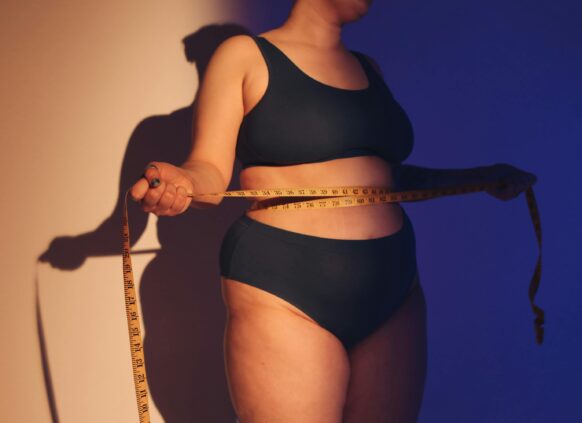
Calorie deficit explained: energy intake vs energy use
The macronutrients in food – carbohydrates, protein and fat – contain energy. We measure this energy in calories (kcal).
When you eat a meal, you take in energy (calories). Your body then uses this energy as you move, think and carry out your daily activities.
If you regularly take in more energy than your body uses, you may gain weight over time.
If you regularly use more energy than you take in, you may lose weight over time. This is known as a calorie deficit.
You can create a calorie deficit by reducing the amount of energy you take in through food and / or increasing the amount of energy you use through physical activity.
You don’t have to count every calorie
Understanding energy balance can be helpful, but counting calories isn’t the only way to support weight loss.
For some people, keeping track of every calorie, ingredient or portion can feel tiring and take the enjoyment out of eating.
At Oviva, we focus on small, sustainable changes that fit into your everyday life. Instead of asking you to count every calorie, we can help you understand your eating habits and make changes that work for you.
Over time, these habits can help you feel more confident and in control of your choices.
How much of a calorie deficit do you need to lose weight?
A bigger calorie deficit isn’t necessarily better. Trying to cut your calories too much can make it harder to get the nutrients your body needs and may be difficult to maintain over time.
Instead, the focus should be on small, realistic changes that fit into your everyday life. This can help you build habits you can maintain, rather than relying on short-term restriction.
A calorie deficit of around 500 kcal a day is often used as a starting point for weight loss – so if you typically ate 2,000 kcal daily, this would reduce to 1,500 kcal.
However, there isn’t one amount that’s right for everyone. Your needs can vary depending on factors such as your age, body size, activity levels and health.
If you’re reducing your calorie intake, it’s important to choose foods that provide the nutrients your body needs and help you feel satisfied. You don’t need to rely on restrictions to make meaningful changes.
6 reasons why your calorie deficit may not (yet) show on the scales
First, changes in your body weight don’t always reflect changes in body fat straight away. Even if you’re making changes that support weight loss, you may not see a steady decrease on the scales each week.
Your weight can naturally move up and down from day to day – try not to let a single weigh-in define your progress.
If weighing yourself feels helpful, keeping the conditions similar each time can make it easier to notice changes over time. Try to weight yourself:
- Once a week
- On the same day each week
- Before your first meal or drink, and after you have been to the toilet
- In a similar amount of clothing each time
And remember, the scales are only one way to see your progress. Changes in your energy levels, habits, fitness, how your clothes fit or how confident you feel with your choices can also be meaningful signs of progress.
If your weight isn’t changing as you expected, there may be several reasons. Here are six to consider.
1. You may be eating more – or burning fewer calories – than you think
There are a few reasons why this can happen:
- It can be difficult to know exactly how much energy (calories) your body needs each day. Your energy needs vary depending on things like your age, body size, muscle mass and activity levels.
- How active you are can make a difference to how much energy you use each day. For example, someone who is active throughout the day may use more energy than someone who spends most of their time sitting.
- Calorie intake and energy use can both be difficult to estimate accurately. Portion sizes, cooking oils, sauces, drinks and snacks can easily be overlooked, while fitness trackers and exercise machines can only estimate how many calories you burn.
So, if calorie counting isn’t helping you lose weight, trying to track every calorie more closely may not be the answer.
Instead, focus on sustainable habits such as eating balanced meals, choosing nutritious foods you enjoy and finding ways to move more throughout your day.
2. You may have gained muscle
If you’ve become more active, you may have gained some muscle. This can mean that changes in your body are not immediately reflected by the number on the scales.
Your weight is only one measure of progress. Changes in how your clothes fit, your strength and how you feel during everyday activities can also tell you something about your progress.
3. Your body may be retaining water
The amount of water in your body can change for several reasons.
Eating foods that are high in salt or carbohydrates can affect how much water your body holds. Hormonal changes can also cause temporary water retention, including around the time of your period.
These changes are usually temporary, but they can affect the number you see on the scales and make changes in body fat harder to spot.
4. Hormonal conditions
Hormonal conditions can sometimes affect your weight.
One example is an underactive thyroid, where the thyroid gland does not produce enough thyroid hormones. This can slow some of the processes in your body and may contribute to weight gain.
If you’re concerned about a hormonal condition, speak to a healthcare professional. They can help you understand what may be affecting your weight and whether you need further tests or treatment.
Losing weight with hypothyroidism
5. Stress and poor sleep
When you’re stressed or not sleeping well, managing your weight can become more difficult. You may feel hungrier, have more cravings, have less energy to prepare meals or be active, and find it harder to maintain your usual routines.
If life is particularly stressful or you’re struggling with sleep, trying to “fix it” can just add more pressure to your day. So, start small with the tips below. Try adding just one to your routine for a few weeks before slowly building from there.
To reduce your stress levels, try:
- Getting outside or taking a short walk
- Making time for something that helps you unwind, such as reading, music or a relaxing hobby
- Talking to someone you trust when things feel overwhelming
To improve your sleep, try:
- Going to bed and waking up at roughly the same time each day
- Limiting caffeine later in the day and alcohol close to bedtime
- Creating a wind-down routine and reducing screen time before bed
If stress or sleep problems are persistent or affecting your daily life, speak to a healthcare professional for support.
The support from the app and my coaching team was amazing! It was like a switch went off – I realised I wasn’t on a diet anymore. This is just how I eat and live now.

6. Your body may respond differently to a calorie deficit
Everyone’s body is different. Factors such as genetics, age, body composition, activity levels, medications and health conditions can affect how your body responds to changes in energy intake.
Weight loss can also slow over time as your body weight changes and your energy needs decrease.
If you’re finding it difficult to make progress, your GP, a dietitian or other healthcare professional can help you understand what may be affecting you and find an approach that fits your needs.
Weight loss that lasts – without calorie counting
You don’t have to figure it all out on your own. Oviva’s NHS-funded weight loss service combines professional support with practical tools to help you make changes that fit your life – without any in-person appointments.
With Oviva, you can:
- Get personalised, 1:1 support to build weight loss habits that fit your lifestyle
- Set realistic goals and take small steps towards habits you can maintain over time
- Use the Oviva app to track your meals, activity, mood and weight in one place
- See your progress over time, helping you recognise changes beyond what the scales show
Ready to take the next step? Take a look at our info pack to find out how to get started.

Medically reviewed by Juliet Finnie
Juliet Finnie is a UK-registered dietitian and Clinical Lead Dietitian at Oviva.
With specialist experience in weight management and diabetes gained across NHS services, Juliet is passionate about translating nutrition science into practical, personalised advice that helps people build sustainable, healthy habits.

Easily log your meals with the photo diary in the Oviva app – a simple way to keep track of what you’re eating.
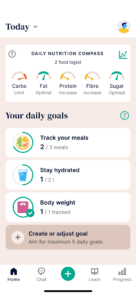
Your health coach will help you set the right personal goals that bring you closer to your feel-good weight.
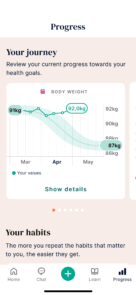
With your unique goals set, the Oviva app has all the tracking you need to work towards them with ease.
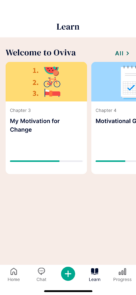
With learning content on nutrition, exercise, and motivation, you’ll become a weight-loss expert yourself.
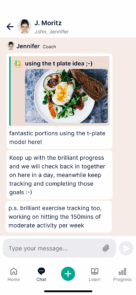
Get 1-to-1 support from a health coach and chat with our nutrition experts anytime via the Oviva app.
-
 Weight loss support
Hypothyroidism diet: what to eat and what to avoid
-
 Weight loss support
How to stop sugar cravings
-
 Weight loss support
Gout diet – what to eat and avoid to prevent flare ups