
Gout diet – what to eat and avoid to prevent flare ups
What you eat and drink can affect your uric acid levels and your risk of gout attacks. But managing gout does not mean you need to completely change your diet. Making realistic adjustments to your eating habits to create a more balanced diet may help – but there is no specific gout diet.
Find out what can help manage your gout, and which to avoid, plus how making changes to your weight may help.
If you’re looking for support on your weight loss journey, find out if Oviva can help.
Key takeaways
- Gout attacks are caused by uric acid crystals in the joints.
- Foods rich in purines can increase uric acid levels, as purines are broken down by your body into uric acid.
- Alcohol and sugary drinks can increase your risk of gout attacks.
- You don’t need to follow a strict diet – small changes that fit into your everyday life can be more effective long term than restrictive diets.
- Managing your weight may also reduce your risk of gout attacks.
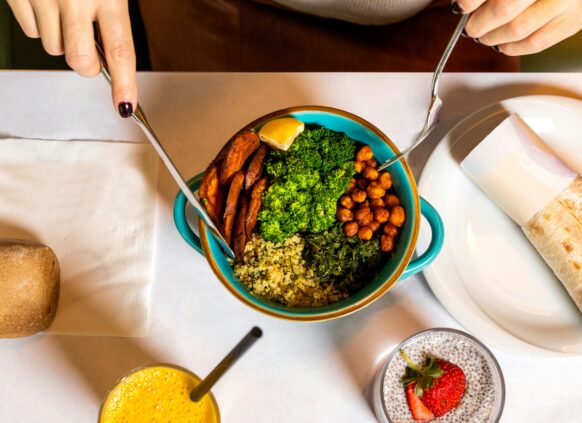
Gout: why diet matters
Gout happens when uric acid builds up in the body and forms crystals in and around the joints. This can cause sudden inflammation, pain and swelling.
Your kidneys usually remove uric acid from your body through your urine. However, some people’s bodies produce too much uric acid or do not remove enough of it.
What you eat can have some impact on the amount of uric acid in your body. For example, foods that are high in purines can increase uric acid levels – that’s because the body breaks purines down into uric acid. Purines are found naturally in some foods, including certain types of meat and seafood.
Your weight can also affect your risk of gout. If you’re overweight, making sustainable changes to your eating habits and managing your weight may help reduce your risk of gout attacks.
This does not mean you need to avoid certain foods completely. Small changes that you can stick to long term can help. It’s more important to build a diet that fits into your everyday life.
Eating for gout
Eating for gout isn’t about getting it “perfect” – it’s about finding a diet you can stick to. The best diet is not a one-size-fits-all approach.
It’s better to find changes that fit into your everyday life, rather than a strict diet that you can only follow for a week or two.
There are a few things to be mindful of when you have gout: purines, alcohol and sugar.
Purines
Your body breaks purines down into uric acid, so eating large amounts of high-purine foods can increase uric acid levels.
You do not need to avoid all foods that contain purines. Instead, try having high-purine foods less often and in smaller amounts. You can also choose lower-purine options more often to keep your meals varied and enjoyable.
Alcohol
Alcohol can increase uric acid levels and may make gout attacks more likely, so reducing how much you drink may help manage your risk of attacks.
If you enjoy alcohol and don’t want to give it up completely, try spacing your drinks out by having sugar-free soft drinks in between, or choosing one more alcohol-free day each week.
Sugar
Drinks and foods high in sugar, particularly sugary drinks, can increase uric acid levels.
Try swapping sugary drinks for water, sugar-free drinks or lower-sugar options. You can also choose foods with less added sugar more often, while still enjoying the foods you like.
The best gout diet: what to eat and avoid
There is no single diet that works for everyone with gout.
Instead, it can help to build meals around a variety of foods that are lower in purines, while limiting foods and drinks that may increase uric acid levels or make gout attacks more likely.
The table below gives an overview of foods you can include more often, as well as those to have less often. It also highlights some foods that may seem like healthy choices but may be less suitable for gout.
| Recommended foods | Foods to limit | |
| Fruit | All types of fruit | |
| Vegetables | All vegetables | Despite claims, high-purine vegetables have little to no impact on risk of a gout attack |
| Grains | All wholegrains, unsweetened muesli without dried fruit | White flour products, sweetened muesli, white rice |
| Nuts and seeds | All nuts and seeds | Sugar-roasted, honey-glazed or salted varieties |
| Meat | Lean poultry without skin, small portions of red meat, once or twice a week | Organ meats, duck, rabbit, pork, fatty meats, bacon, sausages |
| Milk and dairy products | All dairy in moderation. Choose lower fat, sugar-free options where possible. | Sweetened, ready-made products such as rice pudding and fruit yoghurt |
| Seafood and fish | White fish | Oily fish and shellfish |
| Drinks | Water, unsweetened tea and milk | Sugary drinks, alcohol, fruit juice |
Is a keto diet good for gout?
A keto diet may sound like an appealing way to improve your health, but it may not be the best choice if you have gout.
Keto diets are very low in carbohydrates and high in fat, including meat and fish – foods often rich in purines.
And while there is some evidence that keto diets may have anti-inflammatory effects, this does not mean they are suitable for managing gout.
Keto diets can also be restrictive, which may make them difficult to follow over the long term.
For these reasons, a keto diet is not generally recommended for managing gout. There is also limited evidence about its long-term safety.
Instead, a balanced approach to eating can help you make changes that are more sustainable over time.

Losing weight can help manage gout
If you’re living with overweight or obesity, losing some weight may help reduce your risk of gout attacks.
You do not need to change everything at once. Start with small changes that fit into your usual routine. For example:
- Build balanced meals: include vegetables, wholegrains or other high-fibre carbohydrates, and a source of protein at meals.
- Watch your portion sizes: using a smaller plate and avoiding eating from a packet can help you notice how much you are eating.
- Choose water more often: sugary drinks can add a lot of sugar without making you feel full. Try swapping them for water or sugar-free drinks.
- Be mindful of alcohol: alcohol can cause weight gain and increase uric acid levels. Many people find cutting back can help.
- Add more movement: you do not need to start with intense exercise. Small amounts of movement throughout the day can add up.
Even just adding one or two of these into your week can make a difference. And pay attention to the habits that you enjoy the most – these are a great place to start for long-term change.
You don’t have to manage it alone
Oviva’s personalised weight loss support is designed to help you build healthy weight loss habits around food, activity and your health, so that managing your weight becomes second nature.
It’s delivered entirely remotely through our app, and you’ll benefit from:
- 1:1 support from a healthcare coach
- A tailored plan that fits your lifestyle and weight loss goals
- Access to weight loss medication, like Wegovy, if appropriate
Take your first step towards lasting change with Oviva’s NHS-funded programme.

Medically reviewed by Lucy Diamond
Lucy Diamond is a UK-registered dietitian and Vice President of Patient Outcomes at Oviva.
With almost a decade of NHS experience and a role on the Board of Directors at the British Dietetic Association (BDA), Lucy ensures Oviva’s programmes are evidence-based, patient-centred and reflect the latest clinical research.
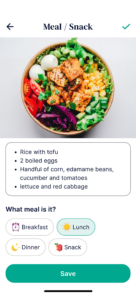
Easily log your meals with the photo diary in the Oviva app – a simple way to keep track of what you’re eating.
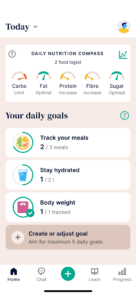
Your health coach will help you set the right personal goals that bring you closer to your feel-good weight.
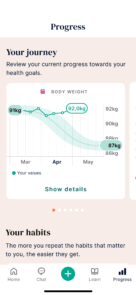
With your unique goals set, the Oviva app has all the tracking you need to work towards them with ease.
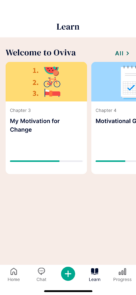
With learning content on nutrition, exercise, and motivation, you’ll become a weight-loss expert yourself.
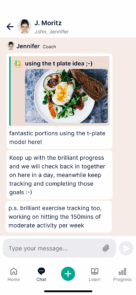
Get 1-to-1 support from a health coach and chat with our nutrition experts anytime via the Oviva app.
-
 Weight loss support
Why am I not losing weight in a calorie deficit?
-
 Weight loss support
Hypothyroidism diet: what to eat and what to avoid
-
 Weight loss support
How to stop sugar cravings